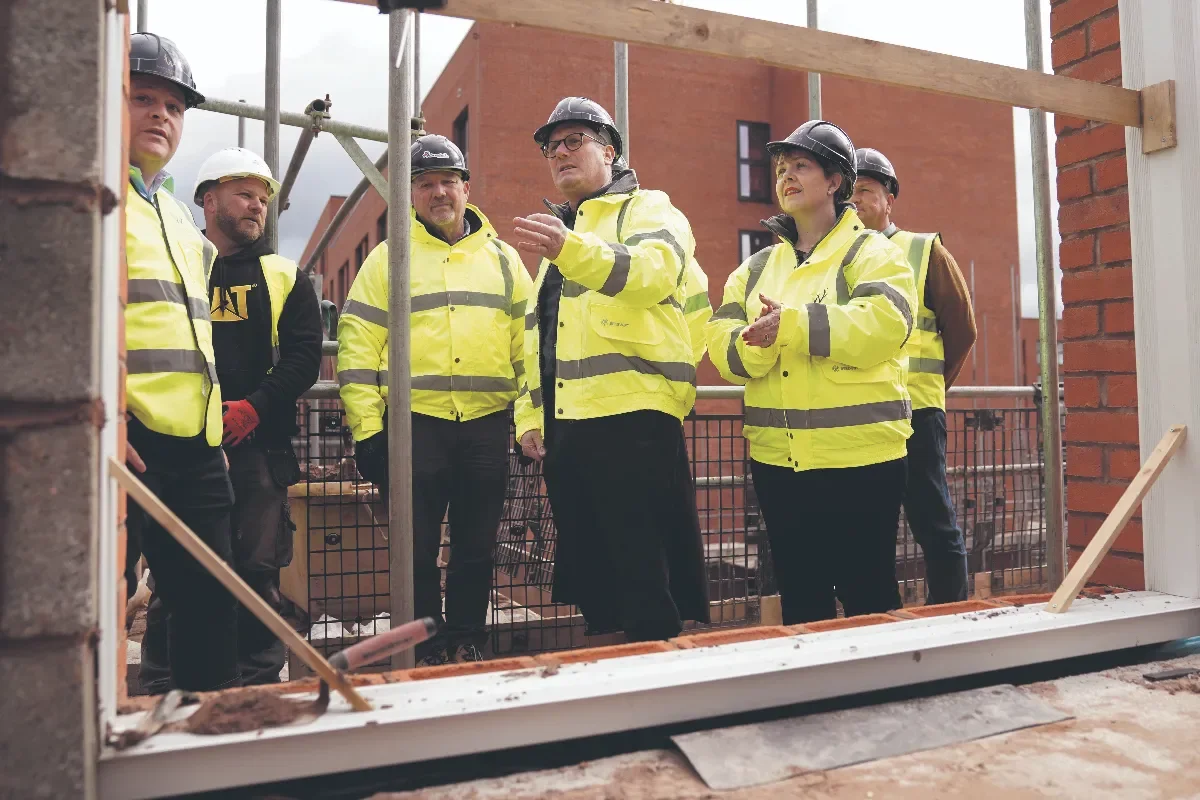
The Labour government has pledged to dramatically increase the country’s housing supply, with a target of 1.5 million new homes ahead of the next general election expected in 2029. However, sector representatives warn that persistent cost pressures, tighter regulations, and policy changes are impeding progress.
The CPA stated that, without prompt intervention, Labour’s goal may be unattainable in practice. The sector, particularly reliant on thousands of small and medium enterprises (SMEs), is experiencing particular strain from these conditions.
Construction forecasts show persistent slowdown
Recently released figures from the Office for Budget Responsibility indicate a marked drop in net housing stock additions. According to the OBR Economic and Fiscal Outlook (March 2026), annual net additions are set to fall from a recent average of 260,000 to approximately 220,000 in 2026-27.
Despite Labour’s efforts to relax planning rules, the OBR noted these have not yet resulted in “meaningful” acceleration of construction. Previous recovery expectations remain delayed, with the OBR not anticipating a significant uptick in housebuilding before 2030.
London’s acute housing shortfall intensifies
The slowdown is particularly acute in London, where the Centre for Policy Studies has described the current shortfall as the most severe since the Second World War.
Latest data indicate that only 4,170 new homes were started in the capital in the previous financial year, a decline of 72 percent year-on-year.
With estimated demand for about 88,000 homes annually, consultancy Molior expects that only around 4,550 homes will be completed each year in 2027 and 2028, exacerbating the city’s housing crisis.
Rising tax burden and regulatory changes
New fiscal measures introduced in the 2024 Budget, including reforms to inheritance tax and Business Property Relief, are drawing criticism from industry bodies.
Effective April, inheritances beyond a £2.5 million threshold will incur a 20 percent tax rate, impacting firms whose capital is tied up in plant and equipment rather than liquid assets.
The CPA reports that 80 percent of its members foresee asset transfer difficulties due to these rule changes, with 76 percent indicating investment in machinery will slow as a result.
SME and family-owned firms express concern
The vast majority of plant-hire businesses, roughly 96 percent according to the CPA, are family owned. Steven Mulholland, chief executive of the CPA, has warned, “More than three quarters of our members have already begun cutting back investment or are planning to do so.”
He added that policy uncertainty, employer National Insurance increases, and rising regulatory costs are hampering the sector’s ability to scale.
Mulholland urged government to “ensure policy does not make a bad situation worse and instead supports the family-owned firms supplying the people, machinery and investment that keep Britain building.”
Industry reactions and future outlook
Further concerns have been raised by other industry leaders such as McBains, a national construction company, which highlighted that while infrastructure projects may continue to support the sector, housing and commercial development are likely to be constrained by planning delays and persistent labour shortages.
The company’s managing director has described minimum wage increases as posing a “particular concern”, stating they deter firms from hiring apprentices at a time of workforce scarcity.
Final Summary
There is broad consensus within the construction sector that the delivery of Labour’s ambitious housing target is at serious risk without strategic intervention to reduce cost pressures and regulatory burdens. Current forecasts from the OBR and industry data indicate prolonged weakness in the rate of new housing starts, particularly in London.
Industry bodies are calling for immediate support to avoid further decline and to enable family-owned and SME construction suppliers to invest and respond to housing demand.
As the government reviews its policy approach, these sector warnings are central to the debate on the UK’s construction outlook. For further sector trends and financial insights, explore the Pie app for up-to-date analysis.