Common Allowable Business Expenses
Office costs like rent, utilities, supplies, and printer ink are usually straightforward claims. These direct costs of running your workspace rarely cause issues with HMRC. If your business manufactures or sells goods, the cost of raw materials is also a claimable business cost.
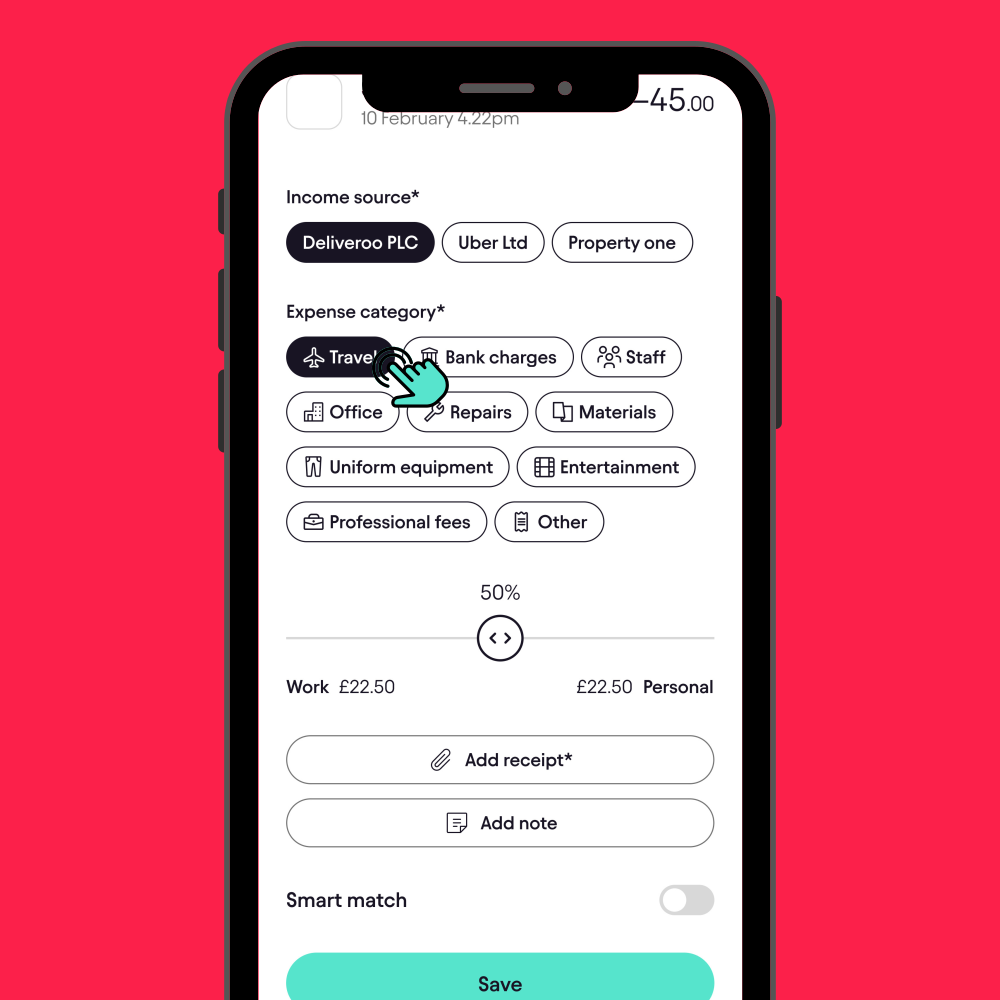
Travel expenses for business journeys are claimable, including business travel, travel costs, and specific expenses like bus fares, but regular commuting to a permanent workplace isn’t. The rule of thumb: if it’s an unusual journey for business, it’s likely allowable. Vehicle expenses can also be claimed, including costs such as vehicle insurance.
Staff costs including employee wages, payments to independent contractors, salaries, benefits, national insurance, national insurance contributions, and training are generally tax-deductible. This includes your own salary and pension contributions if you run a limited company. Allowable staff development expenses include training courses and refresher courses.
Professional fees such as those paid to accountants and solicitors are claimable if they are solely related to business operations. Fees for professional organisation memberships and trade body memberships are also allowable, provided they are directly relevant to your business.
Marketing and advertising costs are almost always allowable. From website costs, domain registration, and hosting fees to business cards and free samples, these expenses directly relate to generating income.
Financial costs such as insurance, bank charges, accountancy fees, and interest and fees on a business loan can be claimed. These are considered necessary for running a business properly.
Most expenses for small businesses and small business owners can be claimed if they are incurred wholly and exclusively for business purposes, so it’s important to keep accurate records and categorise your costs correctly.
For clothing, uniforms and protective gear are allowable, but everyday clothing is not, even if worn for work, and sole traders should also evaluate how a Debt Relief Order can impact self-employment if they experience financial distress.
Tricky Areas to Navigate
Working from home expenses need careful handling. You can use HMRC’s simplified expenses, which apply flat rates, or calculate actual costs based on usage of utility bills such as your electricity bill. If you choose to calculate actual costs, you should divide the total cost of utility bills, including the electricity bill, by all the rooms in your home and the amount of time you spend working there, allocating equal amounts to each room or period used for business.
I once claimed home office expenses using the actual cost method and saved nearly £600 more than I would have using the flat rate. The extra calculations were well worth the effort.
Vehicle expenses offer two methods: claiming mileage allowances or calculating actual vehicle costs. For vehicle purchases, consider whether they qualify as capital expenditures and if you can claim a capital allowance. Each method has advantages depending on your circumstances and vehicle value.
Entertainment costs are almost always disallowed, even when they feel business-related, and entertaining clients typically cannot be claimed against tax, whereas understanding what a limited company structure involves can provide alternative structures for business growth.
Dual-purpose expenses – items used for both business and personal reasons – require fair apportionment. You can only claim the business portion, and you need to show how you calculated it. It’s important to have the phone contract in your own name or the business’s name for accurate claims. Regular commuting is considered a personal expense and cannot be claimed.
Staff costs can be claimed, but domestic help, such as nannies or carers, is not claimable as a business expense.
Clothing is rarely allowable unless it’s a uniform with your logo or protective gear required for your work. Ordinary clothing isn’t claimable, even if you only wear it for business meetings. Training courses are only allowable if they relate to your current business activities; training for a new business is not an allowable expense.
Always track your expenses by tax year and use an income statement to monitor business running costs, ensuring you categorise and report expenses accurately for tax and financial analysis.