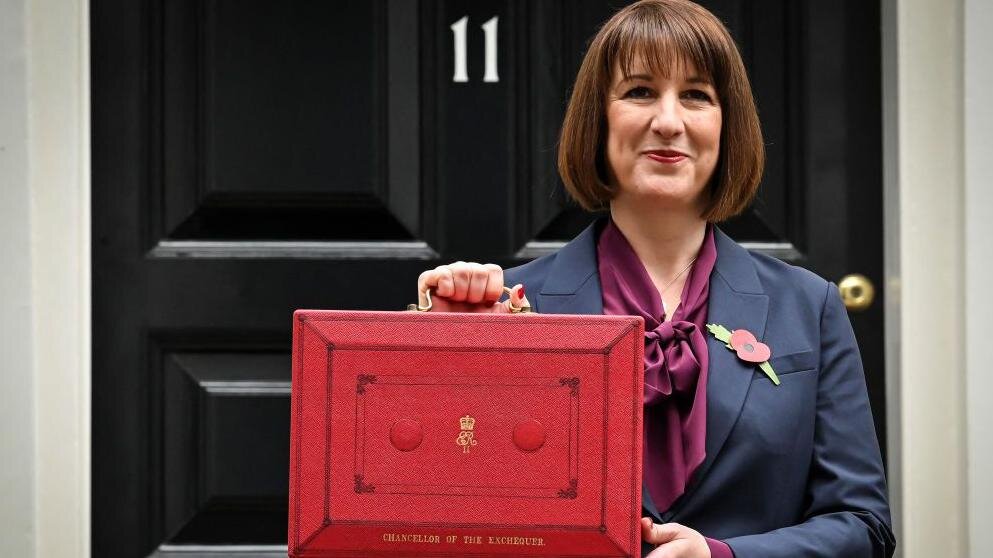
The UK government has announced sweeping fiscal changes as Chancellor Rachel Reeves set out her first budget before Parliament. The Autumn Budget 2025 introduces extended freezes on tax thresholds, significant welfare reforms, property tax adjustments, and new measures on energy and business.
Reeves positions the package as a clear break from austerity, pledging investment in public services and efforts to address child poverty, while maintaining fiscal discipline intended to avert sharp increases in public debt. The comprehensive package has major implications for households, businesses and the wider economy.
Fiscal Policy and Opening Statements
Chancellor Rachel Reeves opened the budget speech by expressing disappointment over the premature release of the Office for Budget Responsibility’s assessment of the budget’s impact. She described the error as “deeply disappointing” and “a serious error”.
Reeves outlined her approach, emphasising public investment at its highest level in 40 years, new international trade deals, and reforms to planning and visa systems.
Reeves reaffirmed her commitment to balancing the UK’s public finances, referencing a £22 billion gap she attributed to the former Conservative government. She stressed that recent tax increases on higher earners were designed to close this funding gap and support essential services including the NHS.
The Chancellor firmly opposed a return to austerity, promising that “working people demanded and deserved change.” Reeves stated, “I said there would be no return to austerity and I meant it… I said I would cut the cost of living and I meant it… I said I would cut debt and borrowing and I meant it.”
Income Tax, National Insurance and Thresholds
Among the most significant announcements is the extension of the freeze on income tax and national insurance thresholds for an additional three years from 2028, continuing a policy begun by the previous administration.
This approach, often described as “fiscal drag,” pulls more taxpayers into higher bands as wages rise with inflation but thresholds remain static. The Chancellor admitted, “This will affect working people,” but argued that accompanying changes would ensure the wealthiest contribute most.
Despite the threshold freeze, headline rates for income tax, VAT, and national insurance will remain unchanged, a move presented as upholding the government’s pledge not to raise direct tax rates for working people. Fiscal analysts have highlighted that the threshold freeze is the largest revenue-generating measure in the budget.
Property Taxes and Council Tax Surcharge
Taxation of property, dividend, and savings income will increase, with both basic and higher rates rising by two percentage points from April 2028. A new council tax surcharge widely referred to as a “mansion tax” will apply to properties valued above £2 million, at £2,500 annually, increasing to £7,500 for homes worth over £5 million.
These measures respond to longstanding calls within parts of Parliament for higher taxes on high-value homes but are not expected to raise substantial revenue relative to other measures. The government chose the £2 million threshold partly to avoid disproportionately impacting London, where average property values remain significantly higher than elsewhere.
Pensions and ISAs Reform
A key change affecting higher earners comes with a new £2,000 annual limit, effective from April 2029, on the amount that can be sheltered from national insurance contributions through salary sacrifice into pensions. Contributions exceeding this cap will be taxed as regular employee pension contributions.
The Office for Budget Responsibility forecasts this will yield an additional £4.7 billion in national insurance revenue. For savers, the annual cash ISA limit will be reduced to £12,000 from 6 April 2027, down from £20,000. However, individuals over 65 are exempt from this change. In addition, a consultation on a simplified ISA product for first-time home buyers is set for early 2026.
Energy Policies and Household Bills
A notable policy shift involves the abolition of the Energy Company Obligation (ECO) scheme, designed to support home insulation. The Chancellor stated this will reduce average household energy bills by £150 next year.
However, critics have pointed out that the ECO previously provided long-term savings through improved energy efficiency, particularly for low-income households. The budget also introduces a new vehicle excise duty for electric vehicles, charging 3p per mile for electric cars and 1.5p for plug-in hybrids.
This is aimed at offsetting anticipated reductions in fuel tax revenue as the UK transitions to greener transport options, with revenue estimated at £1.9 billion annually once fully implemented.
Final Summary
Chancellor Rachel Reeves’ 2025 budget signals significant shifts in UK public finance. By focusing on revenue generation from taxes on wealth, property, and high earners, Reeves seeks to fund increased welfare support and public investment while steering clear of austerity.
The combination of extended tax threshold freezes and new surcharges marks the biggest source of new revenue, with further changes in business taxation, duties, and investment in regions and strategic industries.
Measures to address the cost of living such as minimum wage increases, energy bill reductions, and the abolition of the two-child benefit cap highlight a clear government intent to support lower-income households and reduce inequality.
However, critics have raised questions about the actual progress expected in economic growth and whether the planned investments will achieve the intended boosts in prosperity and opportunity. As the UK digests these changes, the implications for borrowers, taxpayers, and business owners will be significant. For those wishing to track their own