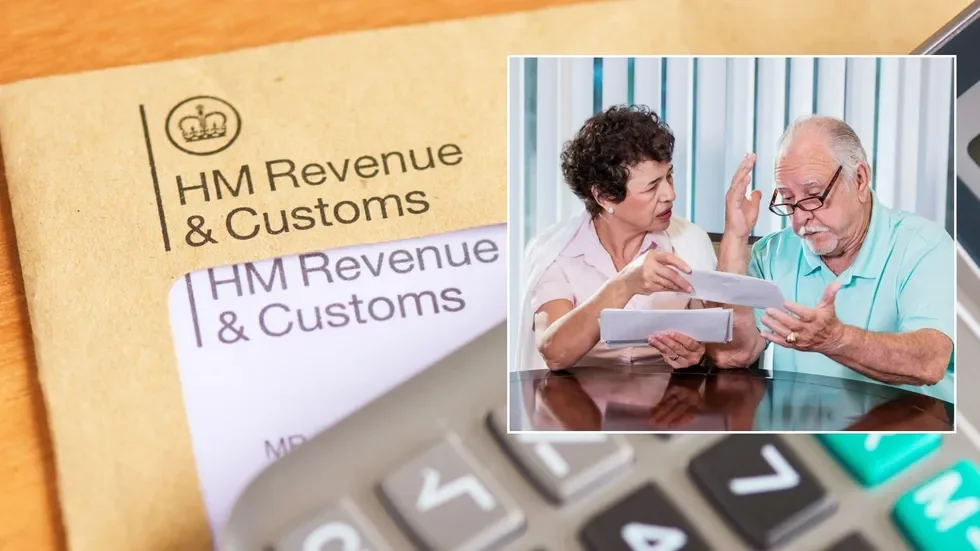
HMRC Payments On Account Create January Tax Shock

HMRC Payments On Account Create January Tax Shock
Charlotte Baroukh

Charlotte Baroukh

Tax Expert @ Pie

3 min read

Updated: 1 Jan 2026

3 min read

Updated: 1 Jan 2026

Millions of newly self-employed workers in the UK could face unexpectedly high tax bills in January as they encounter the HM Revenue and Customs (HMRC) payments on account system for the first time.


This rule requires self-employed individuals under self-assessment to make advance payments towards their next year’s tax liability, often leading to bills that are significantly higher than anticipated.


The requirement may result in some individuals needing to pay as much as 150% of their previous year’s tax in a single January instalment, which has prompted concern and calls for greater awareness of tax obligations among those starting out in self-employment.

Key self-assessment rules

Under self-assessment, individuals who earn untaxed income must calculate and pay their own tax. This applies primarily to self-employed workers whose profits exceed the £1,000 annual trading allowance, or whose tax is not already mostly deducted at source through Pay As You Earn (PAYE).


Newcomers to self-employment are urged to file their tax returns before the annual 31 January deadline and ensure full payment of any tax owed to avoid penalties.

What is the payments on account system?

HMRC’s payments on account system is designed to ease future tax payments by splitting estimated liability into two instalments: one in January and another in July.


However, those unfamiliar with the requirement may be taken aback by the size of the first payment, which includes both the previous year’s tax bill and 50% of that amount in advance for the current tax year.


The system intends to align self-employed taxpayers more closely with employees who have taxes deducted monthly, helping to prevent arrears.

How much must self-employed workers pay?

A person who owes £10,000 in income tax and Class 4 National Insurance might need to pay £15,000 by 31 January covering last year’s bill plus an advance towards the next. A further £5,000 would then be due in July.


Accountancy experts stress that the mechanism is particularly challenging in the first year, although subsequent years see payments ‘level out’ as they are offset against future liabilities.


Interest and penalties apply to late payments, and in the current climate, HMRC charges late payment interest at 4 percentage points above the Bank of England base rate, currently making the rate 8%.

Reducing or managing your payments

Taxpayers who expect their next year’s income to fall may apply to reduce their payments on account. However, they must accurately forecast their future earnings, as excessive reduction can result in interest charges and penalties from HMRC.


Time-to-pay arrangements are available for those unable to meet their liabilities in full, allowing the debt to be spread, but interest will continue to accrue until all amounts are paid.


Claire Thackaberry of the Low Incomes Tax Reform Group noted that first-time self-assessment filers are often ‘surprised and confused’ by this system, especially if their earnings fluctuate.

Online sellers and new self-assessment rules

Recent rule changes require certain online marketplace sellers to declare their earnings via self-assessment from January 2024, if they exceed 30 sales or £1,700 annually.


While selling personal possessions for less than the original price does not attract tax, those generating more than £1,000 in gross income or actively trading stock must report and pay taxes due.


Platforms such as Vinted and eBay are now obliged to report high-volume sellers to HMRC, further increasing the importance of tax compliance in the digital economy.

Final Summary

The payments on account system represents a significant challenge for newly self-employed workers, many of whom may encounter larger than anticipated tax bills in their first year of self-assessment.


While designed to align payment timing with actual earnings and reduce the risk of non-payment, the system’s advance requirements can cause confusion and cash flow difficulties.


Accurate forecasts, prompt communication with HMRC, and an understanding of relief mechanisms are key to managing these obligations. For efficient tracking and reminders, many taxpayers find specialist finance apps helpful when managing their self-employment finances.

Want to get smarter about taxes?

The Tax Pible has tax tips, guides, video tutorials, and expert insights.


Stay up to date with the latest tax news and watch the UKs first tax podcast - the Piecast

Want to get smarter about taxes?

File your Self Assessment - For FREE

Manage your self-assessment in one, easy to use App

  • Save money, time and effort with Pie

  • Add multiple incomes and view your tax in ‘Real Time’

  • File directly to HMRC - for FREE

File your self assessment - for Free

The Free Self Assessment App.

logologo
Want regular updates from us?

Want regular updates from us?

Sign up for regular tax tips and news sent straight to your inbox.

Whatsapp Pie Tax