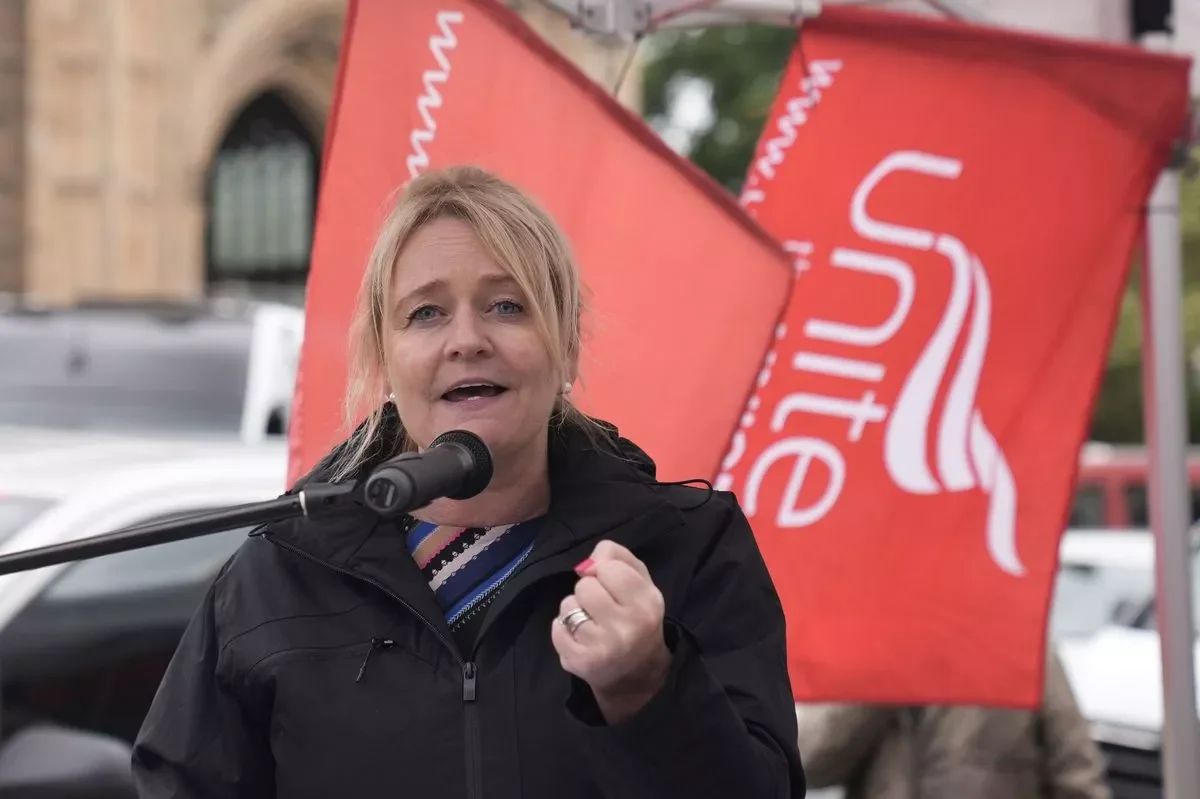
The leader of Unite, the UK's largest trade union and principal union affiliate to the Labour Party, has called on the party to place the interests of working people at the centre of its agenda.
Sharon Graham, general secretary of Unite, delivered a warning that continued failure to address workers' concerns could undermine the party's future prospects.
Graham's remarks, published in late December 2025, highlighted dissatisfaction with Labour's policy direction and leadership, emphasising the need for a vision that prioritises jobs, fair taxation, and meaningful economic reform.
Her statements come amid internal debate within Labour over policy and leadership, with potential implications for the party's relationship with unions and its traditional support base.
Unite leader delivers call for Labour to act
Sharon Graham, general secretary of Unite, has urged the Labour Party to clarify its stance toward working people and to demonstrate a stronger commitment to workers' rights.
Graham called on Labour to 'decide what it stands for and who it stands for,' warning that asking such questions suggests the party's approach is not meeting the expectations of its supporters.
Graham stated that repeated economic crises have disproportionately affected ordinary people and that such trends must not continue into 2026. She warned that if Labour does not shift its focus towards workers, the party risks undermining its own credibility.
Critique of Labour's leadership and direction
Graham criticised Labour's current leadership and policy approach, describing internal debates about party leadership as inevitable given what she termed 'failing leadership.'
She remarked that discussions over who should succeed Keir Starmer are to be expected but argued that substantive policy change must accompany any change in leadership.
The Unite general secretary cautioned against maintaining the same policies under a new leader, asserting, 'A new Labour leadership with the same policies simply won't cut it.'
She described such an approach as a 'doom loop,' stating that further austerity measures, regardless of the party's leadership, would not resolve the underlying challenges.
Questioning party policy and vision
Emphasising the need for strategic direction, Graham criticised Labour's lack of clear vision and ambition in the face of industrial change. Referring to Britain's historical role in the first Industrial Revolution, she argued the country now appears 'rudderless' in adapting to new economic realities.
Graham insisted that merely replacing the party leader would not address the central issues facing Labour or convince workers to support the party. She highlighted the consistent problems that would confront the next prime minister without significant policy change.
Impact of leadership changes on party support
Addressing speculation around possible successors to Starmer, Graham named Angela Rayner, Andy Burnham, Wes Streeting, and Ed Miliband as possible replacements.
However, she asserted that swapping leaders alone, or simply enhancing public messaging, would not restore workers' trust or engagement with the party.
Graham noted that current debates about Labour's future leadership were expected, but without changes to core policies, working people remain unconvinced. She described widespread 'agonising' about leadership but indicated that deeper issues persist.
Unions and engagement with party manifestos
Unite was the only major trade union not to endorse Labour's most recent manifesto, with Graham explaining that it 'did not back jobs.' She stated that the union could not support policies lacking commitments to employment protection and industrial growth.
She cited Unite's opposition to policies such as the reduction of the winter fuel allowance and the pursuit of net zero targets without sufficient investment in new industries.
Graham emphasised the role of unions as advocates for workers, stating that supporting political leaders cannot come at the expense of representing members' interests.
Final Summary
Sharon Graham's message to Labour underscores growing tensions between the party and key supporters in the trade union movement, particularly around issues of leadership, economic vision, and taxation.
The warnings reflect wider union dissatisfaction with policies perceived as insufficiently robust in protecting jobs and incomes. Graham's remarks suggest that without greater emphasis on worker-centric reforms and a clearer vision for industrial strategy, Labour risks alienating some of its longest-standing backers.
As the party navigates both internal discussions about its direction and external pressures from its union affiliates, the coming year may prove decisive for its relationship with the broader labour movement. For users seeking to better understand the evolving landscape of UK politics and union influence, tools such as the Pie app can offer real-time updates and analytical insights.